

School zone speed limit enforcement in Port Charlotte FL |
Updates on Port Charlotte speed cameras and school zone traffic cameras Port Charlotte |
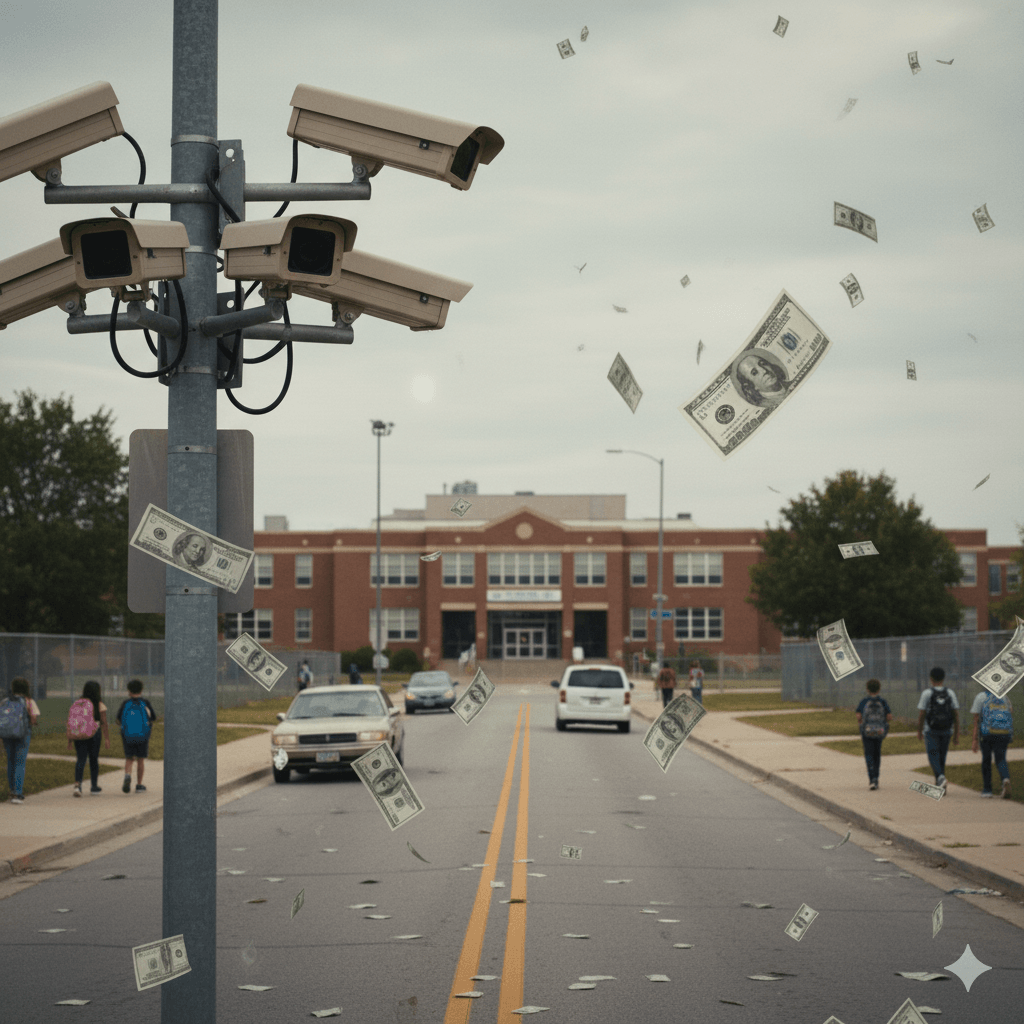
Port Charlotte Approves School Zone Speed Cameras —But Florida’s Track Record Raises Questions
In Port Charlotte, the debate over school zone speed cameras has officially moved from discussion to decision. Charlotte County has approved an automated school zone enforcement program, bringing speed detection cameras to local schools under a model already used in North Port and Cape Coral. County leaders say the goal is straightforward: protect children by deterring speeding during designated school hours.
Yet across Florida, the story of school zone cameras has rarely been simple.
The system approved for Port Charlotte is operated by RedSpeed Florida LLC, a private vendor that installs and manages radar-based enforcement cameras. When school zone lights are flashing and a vehicle exceeds the posted limit, radar detects the speed, the system captures images and a short video clip of the vehicle and its license plate, and the software automatically flags a potential violation.
The citation is not issued immediately. Flagged violations are forwarded for human review. If validated, a $100 civil notice of violation is mailed to the registered vehicle owner. No points are assessed on a driver’s license, and the violation is treated as a civil infraction under Florida Statute 316.1896 (School Zone Speed Detection Systems) .
On paper, it is a hybrid model: automated detection followed by human confirmation.
In practice, that balance between automation and oversight has been at the center of controversy in other Florida cities. When North Port implemented the same RedSpeed system, the rollout was met with scrutiny. Questions surfaced about procurement procedures, due diligence, citation volume, reviewer certification and revenue-sharing structures. While the program remained in place, the public debate was significant and sustained.
Cape Coral experienced even sharper backlash. Shortly after activation, thousands of citations were issued in a short period of time. Residents accused the city of launching what they described as a “money grab” rather than a safety initiative. Critics pointed to citation volume, confusion over flashing signal timing and concerns about financial incentives built into the system. City officials maintained the cameras were about protecting children. But the perception of revenue-driven enforcement proved difficult to shake. 
Source: Cape Coral News Team broadcast graphic. In March 2025, Manatee County commissioners voted to terminate their school speed zone camera program. The county publicly announced the decision here: Commissioners End School Speed Zone Camera Program . Officials cited community dissatisfaction and concerns surrounding public confidence in the program’s implementation.
The decision reinforced a broader pattern across Florida: automated enforcement programs, even when legally structured, can become politically volatile. Now Port Charlotte enters that landscape.
Even before local cameras are fully operational, legal pushback is already visible elsewhere in the state. Some defense attorneys have publicly advised drivers not to automatically pay school zone camera citations without reviewing the evidence and considering whether to contest them. One such example can be viewed here: Florida Attorney Discusses School Zone Speed Camera Citations . There remains the question of proving who is driving the car at the time of citation....the owner or another party?
Under Florida law, recipients have the right to request a hearing. Attorneys who have spoken publicly on the issue encourage drivers to verify speed calculations, confirm that school zone lights were actively flashing and carefully review photographic evidence before making payment decisions.
County officials emphasize that violations are reviewed before notices are issued and that the program is designed strictly as a safety measure. Still, the debate surrounding these systems rarely centers on legality alone. It centers on trust.
Supporters argue that cameras deter dangerous speeding and apply enforcement consistently without bias. Critics counter that when software flags large volumes of potential violations, transparency, calibration documentation and oversight become even more critical.
As Port Charlotte prepares for implementation, residents will likely watch closely for citation volume, clarity of enforcement windows, public reporting transparency and responsiveness to complaints.
The technology may be automated. Public reaction will not be. For now, the cameras are coming.
|
0 Comments
Join the conversation
Be the first to comment
Share your thoughts above.